Licensed and Insured Independent Pros
The rebuild contractor you reach through our line is an independent local outfit with its own license and insurance. Ask for the certificate of insurance at the first visit; a good contractor has it ready.
After mitigation wraps up, the house usually looks worse than it did on the day the leak started. Rebuilding all of that is restoration, which is its own trade with its own crews.
Our referral line links Greenfield homeowners with independent, licensed and insured contractors who handle the rebuild from drywall to paint. Every job starts with an itemized written scope you can hand straight to your adjuster.
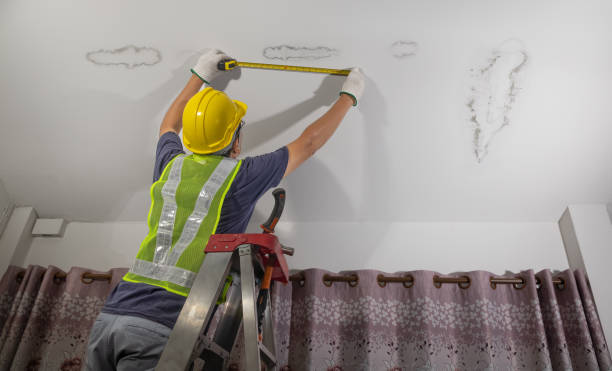
A rebuild after water damage is finish carpentry with an insurance file attached. The independent pros in our network do that kind of work every week in Greenfield.
The rebuild contractor you reach through our line is an independent local outfit with its own license and insurance. Ask for the certificate of insurance at the first visit; a good contractor has it ready.
The estimate comes in writing, broken out by square feet of drywall, linear feet of baseboard and hours of labor. Many contractors use the same line-item format adjusters work in, so the claim review moves faster.
Restoration is not usually a midnight job, yet a slow bid can hold up your entire claim. The dispatcher sets a real walkthrough window on the call with a contractor based close to Greenfield.
The restoration side runs on texture sprayers, taping knives, miter saws and profile gauges, not fans. That gear and some patience are what make a patched wall look like it was never cut.
The work follows the scope of loss, which lists each material removed during the dry-out that now has to be replaced.
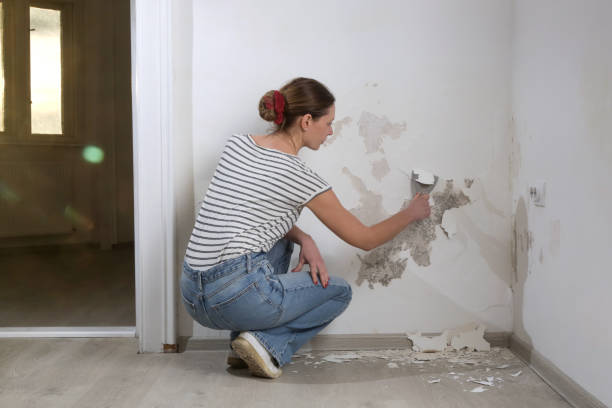
New drywall goes in above the flood cut, followed by tape, mud in three coats and a final sand. The hard part is texture: orange peel, knockdown and skip trowel all have to blend into the wall that stayed.
Wet MDF baseboard swells and never shrinks back, so it is replaced with a matching profile. After a kitchen leak, toe-kicks and sometimes the whole sink base cabinet need replacing too.
LVP and laminate are usually replaced because water stays trapped under the locking joints. Solid hardwood caught early can often be sanded and refinished; engineered planks rarely come back.
The crew cuts a small chip from a dry wall and has the paint store scan it for a match. Repainting full walls to the corners avoids the shiny halo you get from spot painting.
Furniture, boxes and electronics can be photographed, inventoried, packed out and stored while the rebuild runs. That inventory also backs up the contents side of your insurance claim.
Before and after photos, the scope, the mitigation drying records and the final invoice go into one file. Adjusters move faster when the paperwork answers their questions before they ask them.
Mitigation is the emergency half: stop the water, extract it, tear out what cannot be dried and run equipment until the readings hit dry standard. What comes after is restoration, and the work looks a lot more like a remodel than an emergency call.
Picture a dishwasher supply line that seeped under the cabinets for days before anyone saw it. Mitigation pulls the toe-kicks, opens the cabinet bases for airflow and dries the subfloor. Restoration is the part where someone finds a matching toe-kick, replaces the swollen sink base and ties new flooring into the old at the doorway.
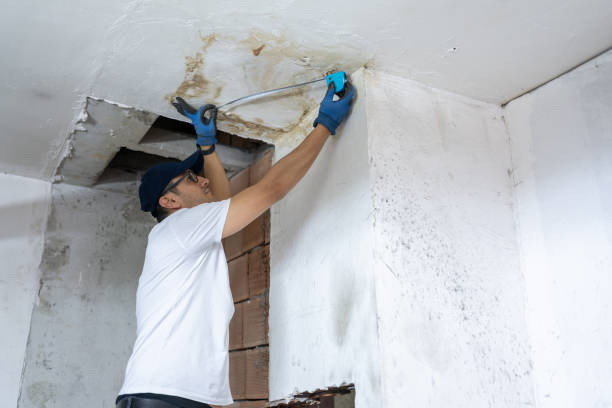
Or take an upstairs toilet overflow that came through the kitchen ceiling. After the wet ceiling drywall is cut out and the joists dry, someone still has to hang board overhead, match the texture and paint the full ceiling plane.
The crews that are great at fast tear-out are not always the ones you want doing finish work in your living room.
Some companies do both halves and many do just one. Ask outright whether the rebuild is part of the job, and get that answer in writing.

The process has four steps, and the first is a short phone call.
Tell the dispatcher what was removed during mitigation and whether you have an open claim. We route you to an independent local rebuild contractor and lock in a walkthrough time on the same call.
The contractor walks each room with a moisture meter to confirm the structure is truly dry before quoting.
The written quote lists each line: board by the square foot, base by the linear foot, flooring, paint and contents handling. Many contractors send it straight to your adjuster and write a supplement if hidden damage turns up.
When the last coat of paint is dry, you walk the house with the contractor and build a punch list. Nothing gets signed until the punch list is done, and any workmanship warranty should be on paper.
Our dishwasher line leaked under the cabinets for days. When the drying crew left, the sink base was swollen and the toe-kicks were sitting in the garage. I called the referral line and got connected to a local contractor who found toe-kicks that matched and dealt with the adjuster's questions directly.
Our kids clogged the upstairs toilet, it overflowed, and the kitchen ceiling ended up with a hole the size of a door. The contractor from the referral line matched our knockdown texture and repainted the full ceiling. You cannot tell where the hole was.
I was sure the oak floor in our hallway was a total loss. The contractor took readings, confirmed it was solid hardwood that had dried out, and sanded and refinished it instead of tearing it out. Honestly the floor looks better now than before the leak.
I own a duplex and the tenant was living out of two rooms while the rest sat gutted. The contractor gave me a line-item scope the insurance company accepted almost as written, and the paint matched on the first try.
One call connects you with an independent local contractor who handles the rebuild after water damage.
Mitigation stops the damage from spreading: extraction, tear-out of wet materials, antimicrobial treatment and drying to dry standard. Restoration puts the house back: drywall, texture, trim, flooring, cabinets and paint.
Insurance usually treats them as two parts of the same claim, often with two separate estimates.
That comes down to scope: one room of board and paint goes quickly, but a kitchen with cabinets and flooring takes much longer. The delays usually come from backordered materials and claim approvals rather than the actual work.
Ask your contractor for a written schedule with the order of trades.
In most cases yes. Insurers may suggest a preferred vendor, but the homeowner usually gets to choose who works on the house. Read your policy and confirm with your adjuster before signing anything.
A lot of the independent contractors we refer deal with adjusters every week and write estimates the way carriers like them.
Often, if they are solid hardwood and were dried quickly. Mild cupping can settle once the moisture content comes back to normal. A good contractor takes readings over a few days before deciding whether to sand and refinish.
Engineered flooring and boards that crowned, split or buckled usually need replacing.
A careful contractor tests the texture on scrap and paints whole walls to the corners so the repair blends in. The paint is matched from a chip cut out of the original wall, not from an old can label.
Ask to see the texture sample before it goes on the wall, and walk the room in daylight before sign-off.
The independent pros in our network are local, which means they know the houses around Greenfield and how the permit desk works.
Older homes near downtown Greenfield tend to have plaster walls and solid wood trim that take extra care to match. Newer subdivisions mean builder-grade drywall, MDF base and LVP that are easier to source but quick to swell.

Describe the open walls and we will route your call to a local pro.
Call +1-877-637-9008